


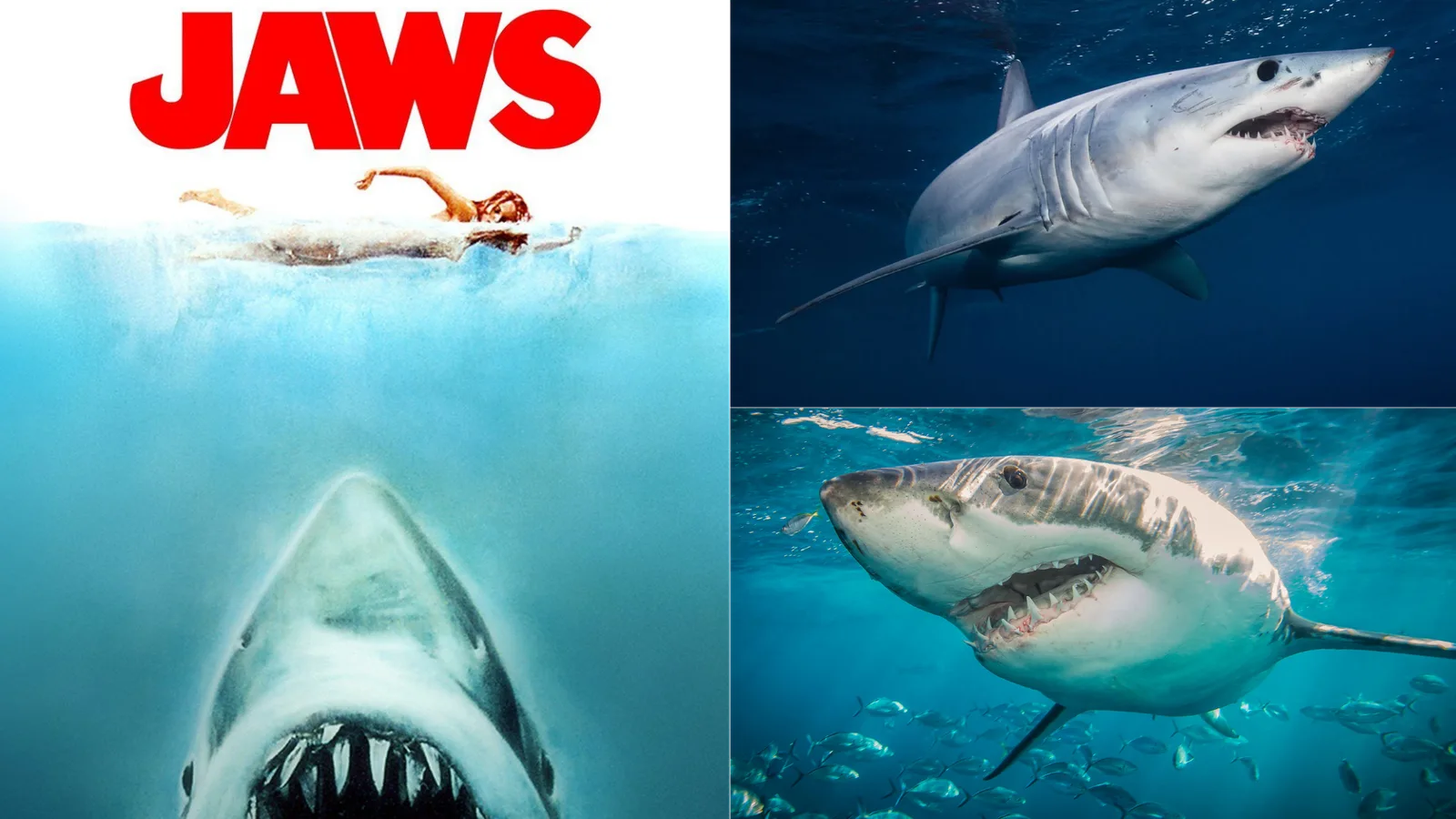
Jaws, a 1975 thriller film directed by Steven Speilberg based on the 1974 book by Peter Benchely, is about a police chief of a beachside town attacked by a killer shark—a Great White shark, to be specific. In the end, the chief kills it with the help of a shark expert. In the movie, the shark is shown to be a mindless killer that hungers for human flesh, while in reality, sharks don’t actively hunt humans; their main diet consists of tuna, seals, crabs, and some species of sharks feed on phytoplankton, a microscopic marine algae. These animals are not as dangerous as these movies make them out to be.
FUN FACT! Sharks have survived four of the five mass extinctions in Earth's history. They largely remain unchanged in their evolution, as they are the top predators in the ocean. The oldest fossil evidence of shark ancestors was found 450 million years ago. Most of the shark's skeleton is made out of cartilage, which does not fossilize, but their teeth, on the other hand, do. That's why most of the shark fossils we see are their teeth.The so-called fact that sharks are older than the North Star, Polaris, is unfortunately false, as Polaris is a system of three different ones with varying ages.
The primary star, Polaris Aa, is approximately 50 million years old, which is younger than the oldest shark ancestor. The ages of the other two components, Polaris Ab and B, are not as well defined, so we cannot tell for sure if the stars are younger or older than our fishy friends.
Sharks have no fault; we humans kill over 73 million sharks per year for their fins. This includes the amount fishermen accidentally kill while catching the fish these sharks eat. Sharks do not hunt humans; if a shark bites you, it is merely by accident, as they might have mistaken you for a seal, which is a part of their diet. Sharks suffer from the pollution mankind creates. Sharks that feed off of plankton, like the basking shark, are prone to swallowing microplastics or plastic bags that are found in their habitat because corporations are littering the ocean. Whale sharks are said to swallow 137 pieces of plastic during an hour of feeding. Other sharks are affected not only by plastic but also by oil spills caused by the same corporations.
If sharks were to go extinct, this would cause irreversible damage to the ocean ecosystem. We need to keep the balance, as they are worth more alive than dead. They may have an intimidating presence when you encounter them in the water, but they are quite friendly if you pay them no attention and do not panic or splash around. Sharks may be dangerous, but they are not as deadly as other creatures in the ocean. For example, the Box Jellyfish, which has enough venom to kill you in a matter of seconds, and another animal, the Stonefish, have venomous spines that could kill you and, hence the name, are camouflaged as rocks, which means you could step on them while walking around.
In the end, sharks aren’t the bloodthirsty creatures they are portrayed to be. They are just animals doing the best they can with the world shifting and changing around them. We humans are destroying their habitat and killing them, causing them to become an endangered species. That's why we should try to give them the benefit of the doubt in certain situations. The moral of the story is that the ocean is dangerous and we should stay as far as possible from it.