With the Philippines being the so-called social media capital of the Philippines, it is no wonder that Filipinos spend most of their time posting, scrolling, and interacting with other people on the internet, with that said in our interconnected world, where digital platforms shape our daily interactions, the essence of using the internet correctly and responsibly has gained unparalleled significance. In recent months freedom walls have gained popularity among school communities with schools like the University of the Philippines, Ateneo, De LaSalle, University of Santo Thomas, and more importantly, APEC Schools having their own dedicated pages for a freedom wall students were able to interact more with each other, with the appeal to be able to post their thoughts and messages anonymously without being embarrassed, with students being able to ask questions ranging from school queries, sharing their opinions about the school, and sharing their mental health to even confessing to their crushes, updating there love life and so much more, freedom walls are good in theory, but sadly there are times that it is not used responsibly. It is worrying that these kinds of pages are being used for hate speech and sometimes even misinformation, highlighting the pressing need to foster a sense of digital citizenship among the youth to ensure a safer and more respectful online environment.
Freedom Walls, intended to be a platform for open expression and the free exchange of ideas, was established with the noble vision of promoting freedom of speech and aimed to make the student community get together with relatable posts as students of the same school. However, the unregulated environment and the anonymity it provided inadvertently created a breeding ground for cyberbullying, libel, and online harassment, actions that directly undermine the respect that is so central to our school's identity. To give a perspective on how bad it can get, last year the UP Diliman Freedom Walls had this as their pinned post:
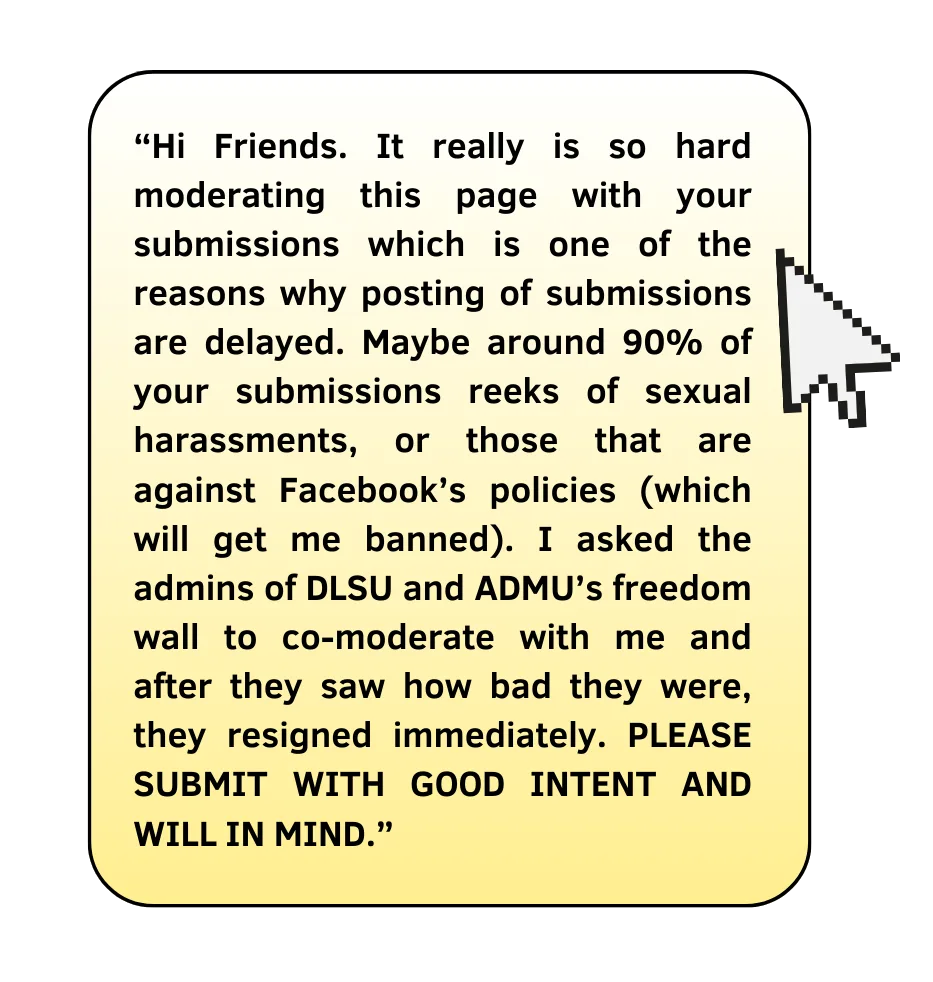
This further proves the necessity of learning how to be a responsible digital citizen. It is essential that students not only understand the potential consequences of their online actions but also actively work towards fostering a culture of respect and responsibility in the digital realm, ensuring a safer and more inclusive online environment for all.
As we strive to be Better Each Day, the APEC community should recognize that true progress entails being responsible and ethical digital citizens. The recent misuse of the Freedom Wall highlights the pressing need for a thoughtful approach to online behavior that aligns with our golden rule of respect. While page administrators hold the power to filter through submissions and moderate content, the choice to allow offensive, harmful, and negative posts to persist is a stark example of the challenges we face in fostering digital citizenship. This situation highlights that mere access to digital platforms needs our mindfulness and self-regulation; we must educate ourselves about the responsible use of these tools and the consequences of our online actions, or “Think before you click.”
With the recent APEC Freedom Wall controversy shedding light on the challenges of online interactions within our school community, we, as a school, have an opportunity to transform this unfortunate incident into a valuable learning experience. It is our duty to instill in ourselves the principles of digital citizenship, teaching ourselves how to use the power of online communication responsibly. We must empower them to differentiate between constructive criticism and online harassment, embrace the diversity of thought, and contribute positively to the digital realm.
On the brighter side, among the submissions on the Freedom Wall, there are instances of constructive feedback, thoughtful criticism, and lighthearted contributions that align with our vision of what the Freedom Wall should represent: students who share their relatable experiences with assessments, making small jokes only APEC students could understand as an inside joke, expressing concerns for academic-related things, and whatnot. These positive expressions reflect the values we uphold and the behavior we encourage among our students – a community that respects one another and fosters a culture of empathy and mutual support.
Freedom Walls can become a model for responsible digital expression and communication. By implementing clear guidelines for appropriate content, encouraging self-moderation, and fostering discussions about digital ethics, we can transform it into a platform where students respect one another and engage in meaningful, respectful dialogue while maintaining the comfortable atmosphere a freedom wall should have.
In conclusion, the recent events surrounding the APEC Freedom Wall underscore the importance of digital citizenship in our school community. By aligning our digital behavior with our school's values and mission, we can ensure that our online presence reflects the respect, empathy, and responsibility we uphold. As we strive to be better each day, fostering digital citizenship is a critical step in achieving these goals and preparing our students for a world that values not only freedom of speech but also responsible digital conduct.