The Philippines is one of the countries with the lowest literacy rates in Southeast Asia and the world. A study entitled “Southeast Asia Primary Learning Metrics (SEA-PLM) 2019” conducted by the United Nations Children’s Fund (UNICEF) and the Southeast Asian Ministers of Education Organization determined that the Philippines is included in the lower half of the study’s rankings in 3 learning domains: Reading, Writing, and Mathematics. It is noted that most of the Philippines’ 5th graders in the study have a reading comprehension of the first years of primary education in other Southeast Asian countries, therefore being the second-worst performer with 10% performance while Vietnam with 82% performance.
Three years later, it was yet again determined that the Philippines is still among the countries with the lowest proficiency in learning domains such as reading comprehension, mathematics, and science through an assessment conducted by the Organisation for Economic Co-operation and Development (OECD) entitled “Programme for International Student Assessment (PISA) (2022).”
It is highlighted in the PISA 2022 results that the Philippines’ performance has not improved since 2018, with 16% of Filipino students achieving a minimum score of Level 2 Proficiency in Mathematics, significantly lower than the OECD’s average score of 69%. Additionally, 24% of Filipino students achieved a minimum score or higher of Level 2 Reading Proficiency, still substantially lower than the OECD average of 74%.
Both of the aforementioned studies were conducted to assess the current situation of the Philippines and its progress in achieving the 4th Sustainable Development Goal (SDG): Quality Education, a goal that will be addressed by the current Student Council through Project IGNITE.
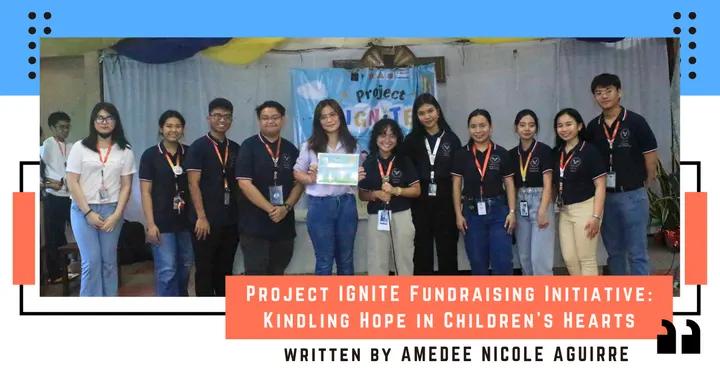
Project IGNITE, an acronym for “Inspiring Growth, Nurturing Individuals Toward Excellence,” seeks to contribute to alleviating problems surrounding lack of education and access to learning resources. To implement this project, APEC Schools New Manila students may help by learning basic skills like dancing, arts and crafts, basic literacy skills, etc. managed by different clubs. They may also be given the chance to apply what they have learned by teaching children in the Department of Social Welfare and Development - Reception and Study Center for Children (DSWD-RSCC). Additionally, Project IGNITE aims to collaborate with different organizations to (1) improve the learning experience during the project’s implementation, and (2) address the children’s basic needs like clothes, hygiene materials, food, books, art materials, and the like.
The word “ignite” was chosen as this represents the overall objective of the project: to hone their learning and spark interest in discovering more of the children’s unseen talents. Furthermore, the project targets three UN SDGs: Quality Education, Good Health and Well-being, and Partnership for the Goals.
To kickstart the implementation of Project IGNITE, we encourage the ANEWMAN community to donate their old clothes, books, art materials, and toys suitable for use for children under 10 years old. We also encourage everyone to provide the following for the hygiene kits that will be provided to the children:
Alcohol
Wet Wipes,
, Tissues
, Soap
, Toothbrush
, Toothpaste
, Mini Comb
, Plastic Mirror
, Face Mask
, Insect Repellant Lotion
, Bandaids
, and Small handkerchiefs
Donations will be open until February 29, 2024. Other activities related to Project IGNITE’s implementation will be announced soon!